
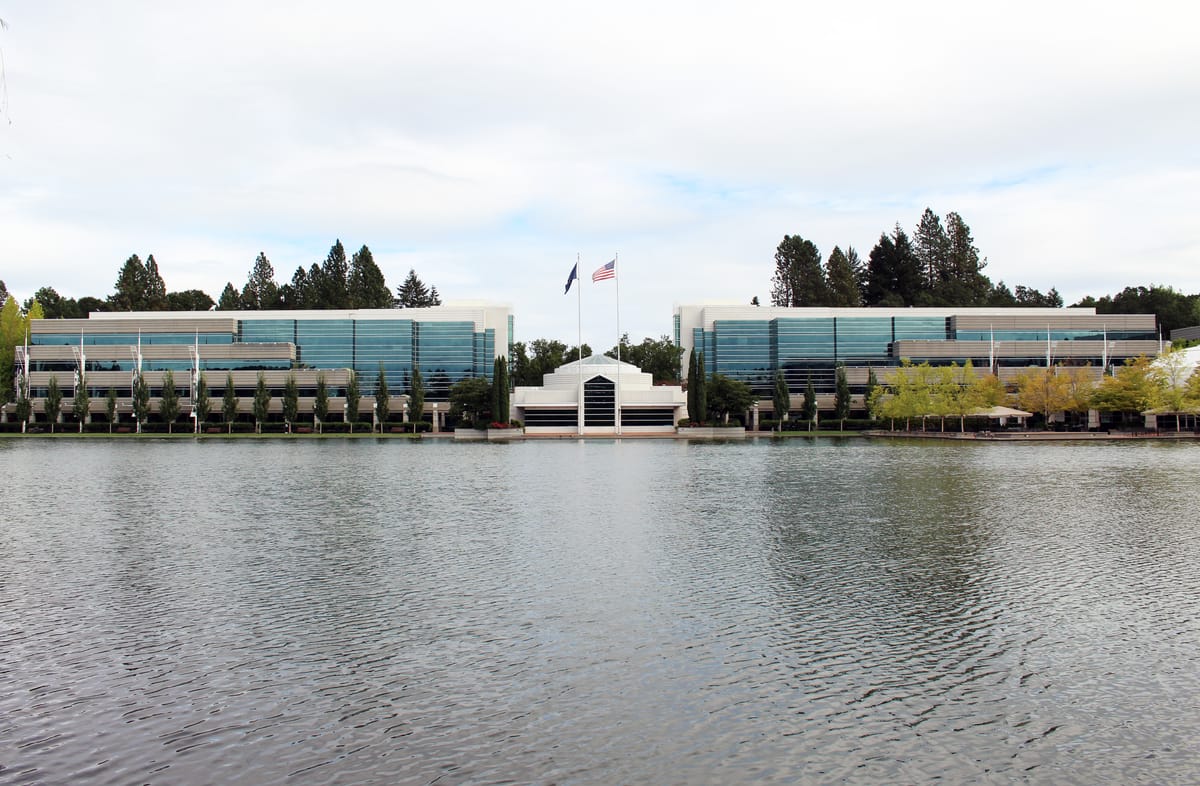
Nike will drop out of the S&P 100 before U.S. markets open on Monday, September 21, 2026, ending a run of nearly 18 years in the index of the country's 100 largest public companies. S&P Dow Jones Indices announced the change on September 8 as part of its quarterly rebalance, Fortune reported.
The numbers behind the removal
The S&P 100 is sorted by market capitalization, and Nike no longer clears the bar. The company was worth roughly $264 billion at its November 2021 peak. It is worth about $57 billion now — a decline of more than $200 billion, or 78% from the peak, per Fortune. The stock peaked at $179.10 and trades around $38, down 36% in 2026 alone, per Fortune.
Yahoo Finance reported that Nike closed at $38.40, its weakest level in 12 years, down roughly 50% over one year and 76% over five. Across that same five-year stretch, the S&P 100 itself gained 83%.
Who takes Nike's place
Four companies move up from the wider S&P 500 to fill the openings: Dell Technologies, Palo Alto Networks, Arista Networks and SanDisk. All four are classified in the information technology sector. Nike is not the only company leaving on September 21: Yahoo Finance reported that Honeywell Aerospace, Simon Property Group and Colgate-Palmolive exit the same day.
Nike keeps its S&P 500 membership. The rebalance moves it out of the large-cap 100 only.
What the business has been telling investors
Nike has guided down for several consecutive quarters. In June the company guided to a 2% to 4% revenue decline for the following quarter against Wall Street expectations of roughly 2% growth, with then-CFO Matt Friend telling investors that consumers are "under pressure around the world" and that the environment would not improve meaningfully for six months. Fiscal fourth-quarter revenue of $10.97 billion beat estimates, but leaned on a roughly $986 million tariff refund.
CEO Elliott Hill, who returned to run the company in October 2024, has spent that period restructuring. Nike named Pfizer's David Denton as its next CFO to replace Friend, and Hill has reshuffled the leadership team, creating a COO role while eliminating the CTO and CCO positions. In December, Hill, Tim Cook and Robert Swan collectively bought $4.45 million in Nike stock as a confidence signal behind the "Win Now" strategy.
Nike reported $46.4 billion in fiscal 2026 revenue, down 2% on a currency-neutral basis, per Fortune. Direct-to-consumer revenue fell 6% to $17.7 billion while wholesale revenue rose 6% to $27.5 billion, and Greater China sales fell 17% on a constant-currency basis in the fourth quarter.
Source: Fortune


Comments